
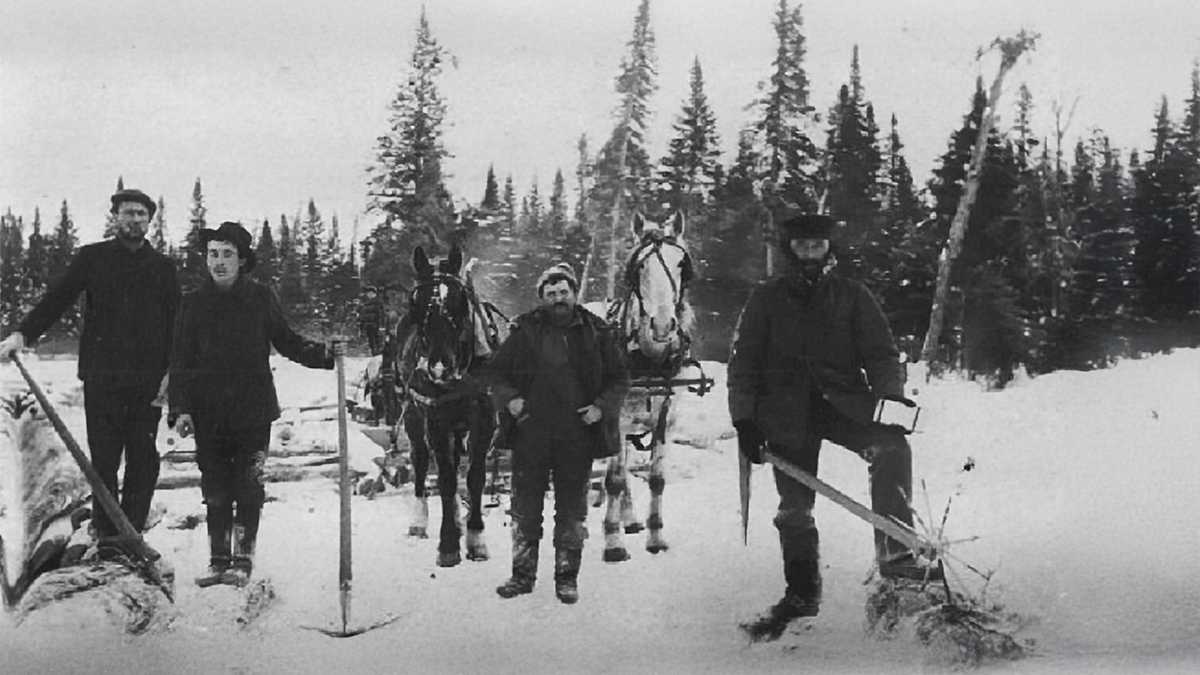
In Maine's golden era of logging, the scaler held a critical responsibility: determining just how much usable lumber a log could produce. And with so much riding on the numbers, trust in the scaler's judgment was as important as their skill with measuring tools.
A Job of Precision and Integrity
In the business of timber, payment was tied to board feet—the industry's unit of measurement for sawn lumber. Cutting crews and teamsters were paid based on how much timber they delivered. River driving companies charged fees based on how many board feet they floated downstream. And landowners or bosses depended on accurate counts to make sure their investment paid off.
This made the scaler's job a high-stakes one. They were the impartial eyes and hands in a process filled with conflicting interests. Though they were often hired by one party—typically the landowner or a state agent—their loyalty had to be to the measurement alone. That kind of objectivity made them stand apart.
A Lone Arbiter Between Crews and Owners
Unlike the tight-knit cutting crews or boisterous teamsters, the scaler worked independently. They weren't part of the crew and often moved between camps or job sites. In many ways, they functioned like a referee—sometimes respected, sometimes resented. Disputes over log measurements weren't uncommon, and both sides were quick to accuse the scaler of favoring the other.
To settle disagreements, a state-appointed scaler could be called in to review the records. The original scaler, however, was expected to stand by their measurements—because those numbers could affect hundreds of dollars in wages and fees.
Understanding the Log Rule
Central to a scaler's job was the log rule—a formula or table used to estimate how much finished lumber could be milled from a given log. It accounted for a log's diameter and length, producing an estimate in board feet.
By 1906, there were over 45 recognized log rules in use across North America. These rules varied by region, sawmill practices, and local timber types. Before the scaler ever measured a log, everyone had to agree on which rule to follow.
But even with a standard rule in place, judgment came into play. Logs weren't always perfect. The scaler had to account for crooked, hollow, or damaged logs, deducting footage accordingly. These decisions weren't always popular—but they were necessary.
The Tools of the Trade: Walking Wheels and Calipers
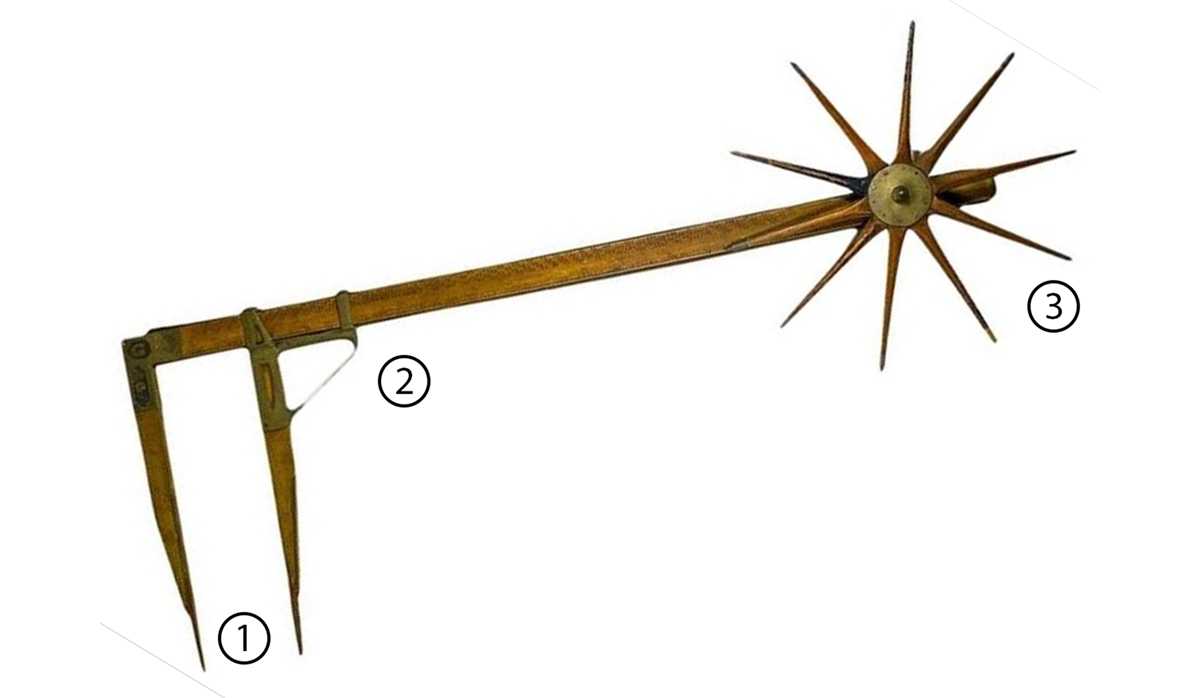
To do the job right, scalers relied on a few key tools. One of the most common was the walking wheel log caliper. This device used a rolling wheel to measure a log's length—each full revolution equal to five feet. The caliper's arms then measured diameter.
Using a printed scale or rule attached to the caliper, the scaler could calculate the log's estimated board feet on the spot.
By Maine law, all calipers had to have brass tips—a small but important detail meant to reduce wear and ensure long-term accuracy. Even the tools were held to a standard of precision.
Guardians of the Record
Whether out on a snowy landing or walking along a river boom, the scaler had to do more than just measure. They had to record each log's size and value in a scale book, often jotting notes on the log's butt end with chalk or crayon. These records formed the basis of payment and shipping decisions.
Though the scaler's work often went unseen by the public, it was vital to every part of the lumbering process—from forest to mill, and paycheck to profit.
Volunteer
Your Way
Not all volunteers wear logging boots (but you can if you want to). Whether you're great with tools, enjoy talking with guests, or just want to pitch in behind the scenes, there's a role that fits your time and talents.
Volunteer with Us