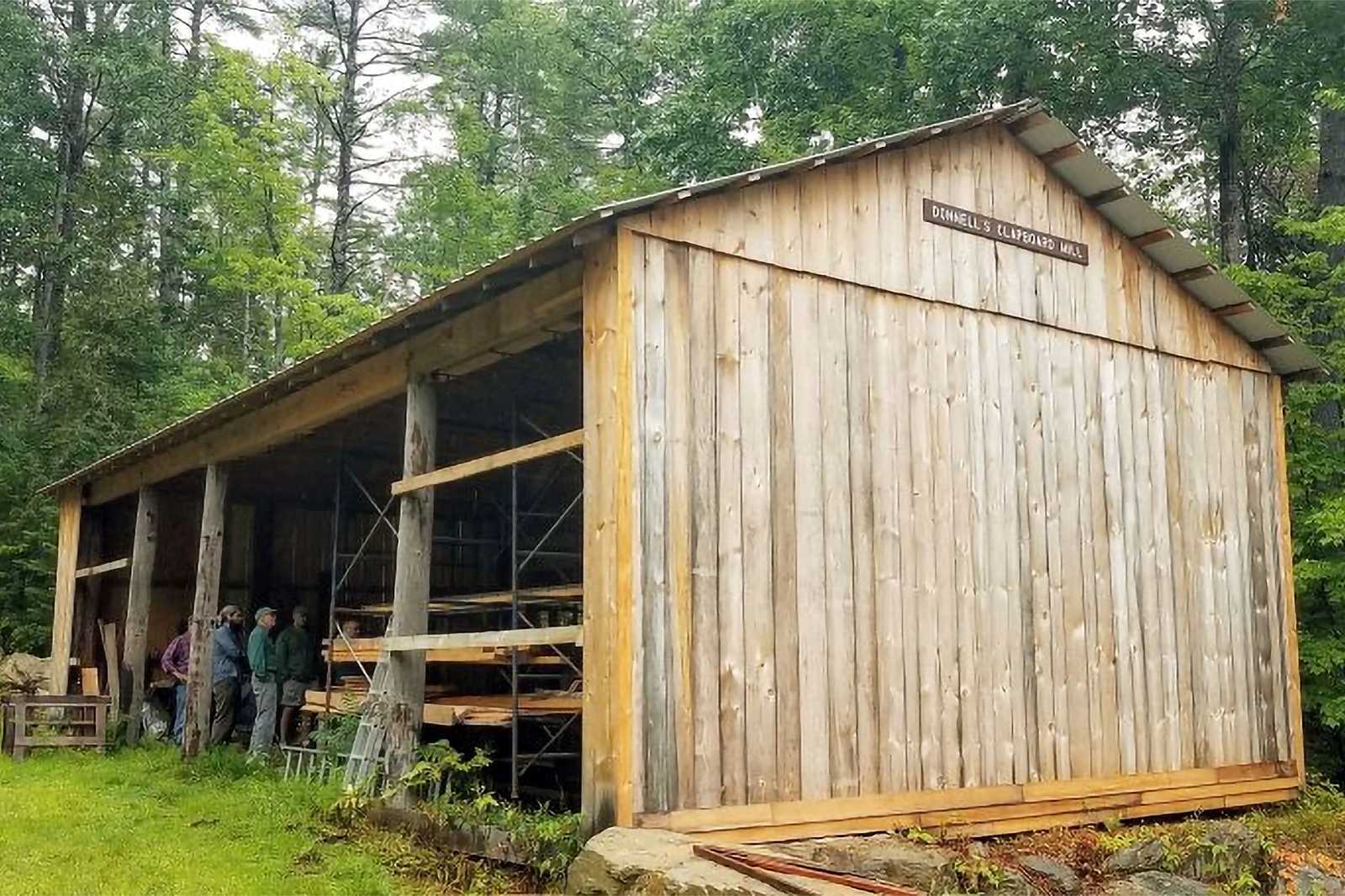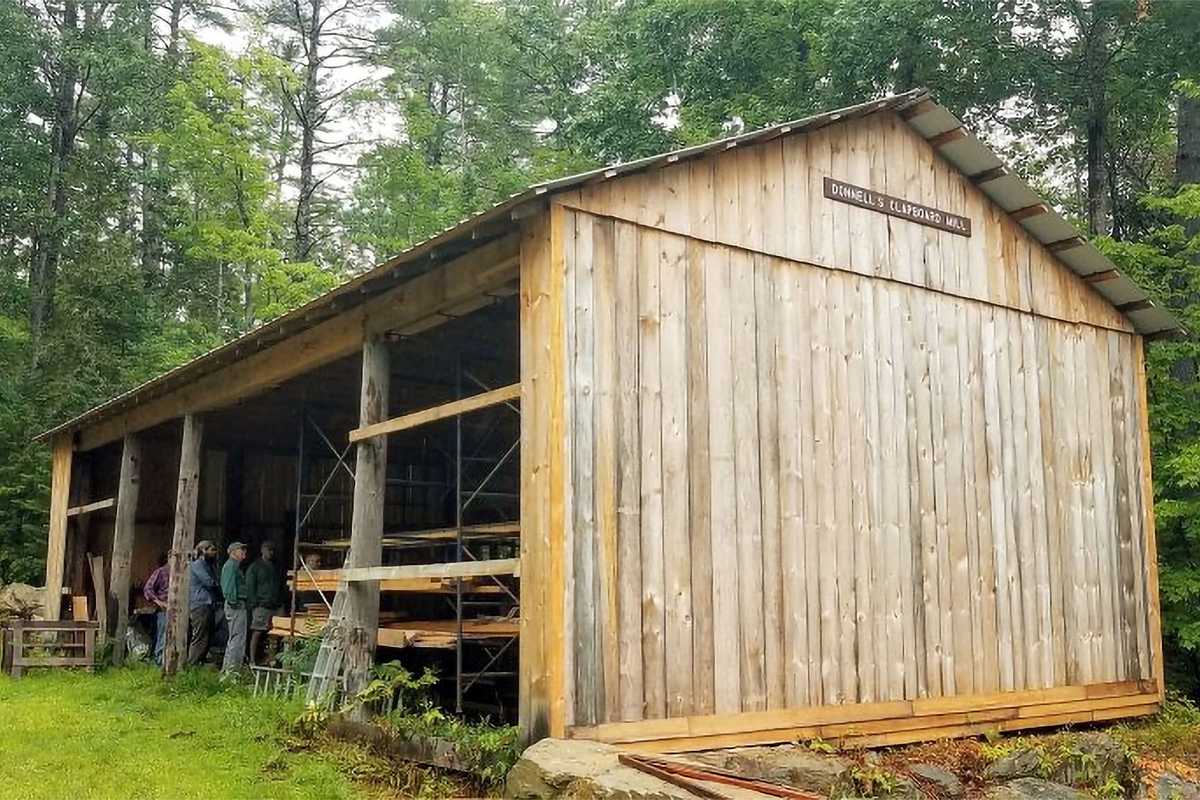
Donnell Clapboard Mill Restoration Project Preserving a rare piece of Maine’s industrial history

Project Overview

The Donnell Clapboard Mill is a remarkable example of Maine’s traditional forest industry ingenuity. Originally operated by Bill Donnell in Sedgwick, Maine, the mill is powered by a 1939 John Deere make-and-break engine—a durable piece of machinery that once reliably drove the mill’s intricate mechanisms. The mill also features an 1889 Lane clapboard planer, used to dress the surface and edges of each board.

The museum’s restoration effort will preserve this unique piece of industrial history and revive the craft of clapboard-making for future generations to experience firsthand.
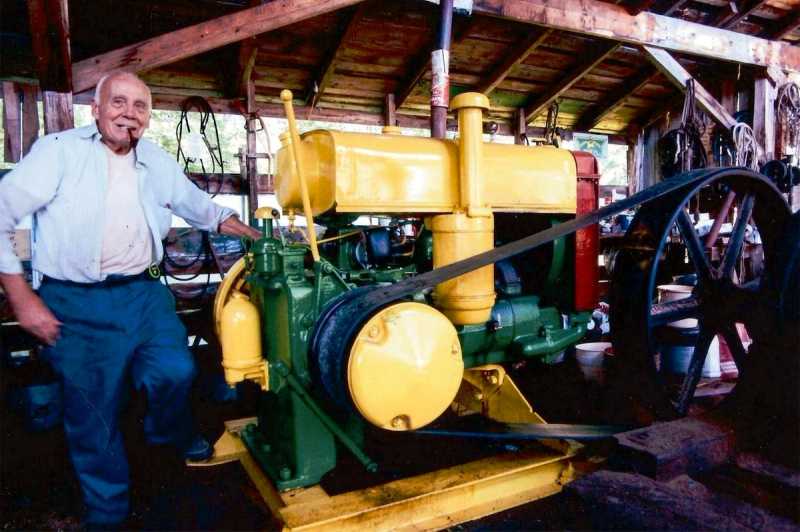
Bill Donnell seen with his 1939 John Deere make-and-break engine

Bill Donnell

For years, Bill Donnell was a familiar figure at the Blue Hill Fair, often seen working the mill and sharing stories—always with his signature pipe in hand. After his passing, his sister donated the mill to the Maine Forest & Logging Museum. For nearly a decade, it rested under a tarp, patiently awaiting its next chapter. Now, with your help, the mill is finally poised to have a building constructed around it and return to working condition as a key interpretive exhibit.

Bill Donnell with his 1939 John Deere make-and-break engine
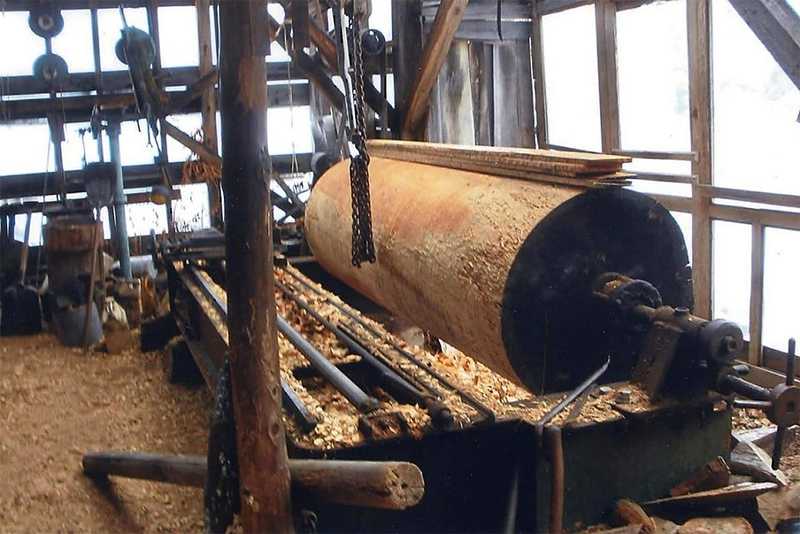
Starting with a log at least 16” in diameter, the ‘rosser’, a giant lathe, created a giant dowel. Once pie-shaped wedges were cut and dried, then surface planed, you had a clapboard made to last 200+ years.

Clapboard Manufacturing

Before industrial saws were available, clapboards were made by hand using a method called riving. This labor-intensive process split wood along the grain, producing 4-foot-long clapboards that could last for centuries due to the way the grain followed the natural structure of the wood.

Mechanization eventually brought two main approaches to clapboard production:

  • Resawn Clapboards: Flat-grain boards cut on early saws. These boards had a wavy grain and, while easier to produce, were not as durable. Modern clapboards are still made this way, though they rarely match the lifespan of traditional riven boards.
  • Quarter-sawn (Rift) Clapboards: Using a “rosser”—a large lathe—the log was turned into a giant dowel, then sliced into pie-shaped wedges. These wedges retained a straight grain similar to hand-riven clapboards, giving them superior durability. Bill Donnell’s mill is the only known saw designed to cut 8-foot-long rift clapboards—boards truly made to last.
Starting with a log at least 16” in diameter, the ‘rosser’, a giant lathe, created a giant dowel. Once pie-shaped wedges were cut and dried, then surface planed, you had a clapboard made to last 200+ years.

Why This Project Matters

The Donnell Clapboard Mill is a one-of-a-kind artifact that tells a deeper story about Maine’s rural ingenuity, craftsmanship, and resourcefulness. Beyond preserving rare machinery, the project reconnects us with an era when durability and skill defined the built environment.

Bringing the mill back to life will give visitors an opportunity to experience firsthand how high-quality clapboards were once produced—a process involving precision, handwork, and purpose-built machinery. Few places in the country can demonstrate this form of manufacturing, especially using original, operational equipment.

Completing the restoration will also allow us to honor the legacy of Bill Donnell, a craftsman who kept the old ways alive well into the modern era.

Restoration Goals

The restoration project is focused on three key goals:

  1. Construct a Period-Appropriate Mill Building
    Volunteers are ready to begin construction of a historically informed structure to house the mill, protect the equipment, and provide an immersive setting for interpretation.
  2. Reassemble and Restore the Machinery
    All original mill equipment—including the John Deere make-and-break engine, Lane planer, and custom saws—will be carefully restored and installed for demonstration use.
  3. Develop Educational Programs and Live Demonstrations
    Once operational, the mill will serve as a unique teaching tool for schools, historians, and museum visitors. Live demonstrations will showcase the full clapboard-making process, from raw log to finished board.

Help Us Bring the Donnell Mill Back to Life

Make a Donation Become a Volunteer

Your support can help preserve an extraordinary piece of Maine's industrial heritage. Whether you're interested in volunteering your time, contributing materials, or making a donation, every effort brings us closer to sharing this unique craft with the public.

Thank You to Our Supporters

We are deeply grateful to the volunteers, donors, and local businesses who have already contributed time, expertise, and resources to this project. Your dedication helps preserve Maine’s rich forest heritage.

Donnell Clapboard Mill

Be a Part of Something Rooted

From vintage logging gear to water-powered sawmills, your membership keeps the museum running strong. It's support that goes a long way.

Become a Member