
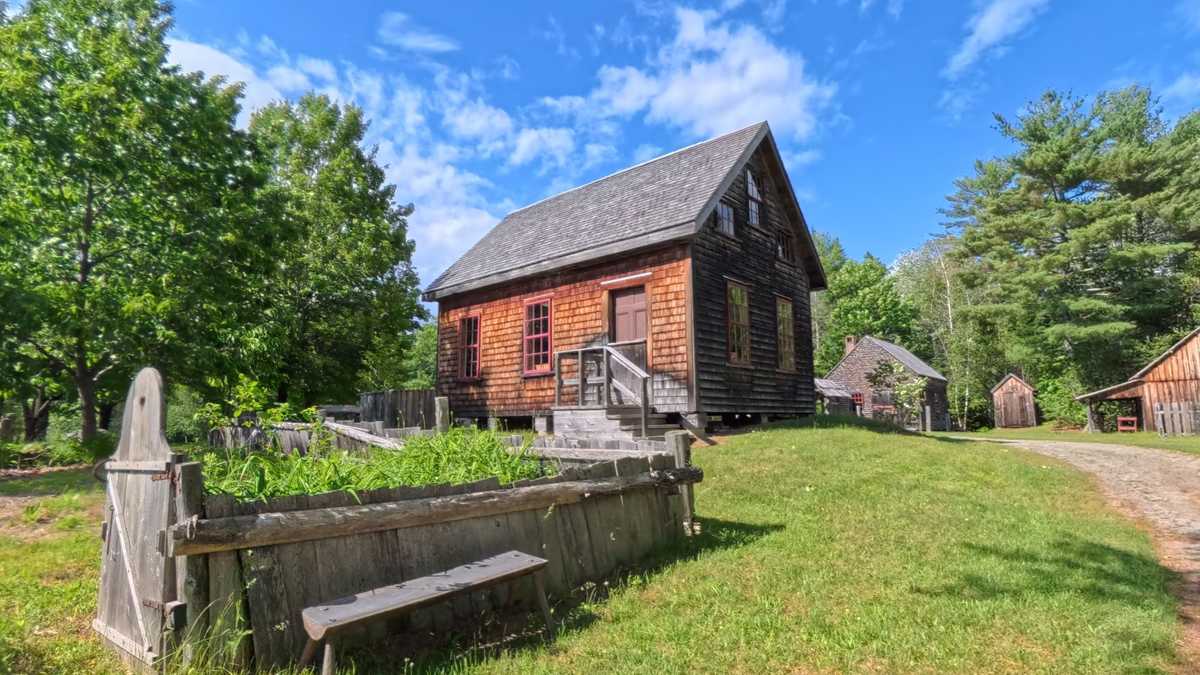
The Sawyer House offers visitors a window into the domestic world of Maine’s settlers during the 1800s. Built using traditional post and beam construction, the house itself reflects the durable, resourceful craftsmanship of the time. It stands as a tribute to the labor and ingenuity of families who built their homes—literally and figuratively—from the ground up.
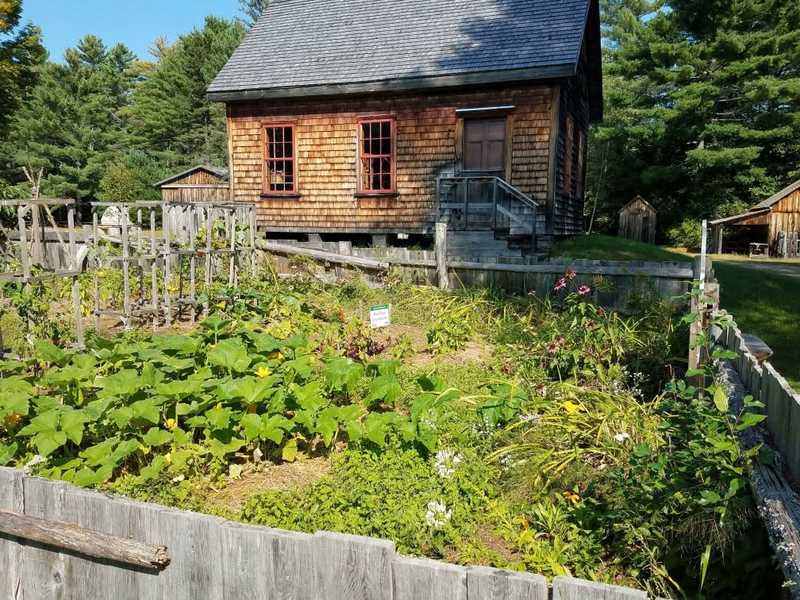
The Garden Beside the Home
Just outside the house, a heritage-style garden recreates what a typical mid-19th-century settler might have planted. Rows of vegetables, medicinal herbs, and pollinator-friendly flowers paint a picture of a self-reliant lifestyle, where the garden was not just a source of food, but also of healing and household utility.
Each plant is chosen to reflect the practical needs and growing conditions of the period, providing visitors with a deeper appreciation for the day-to-day work required to sustain a family.
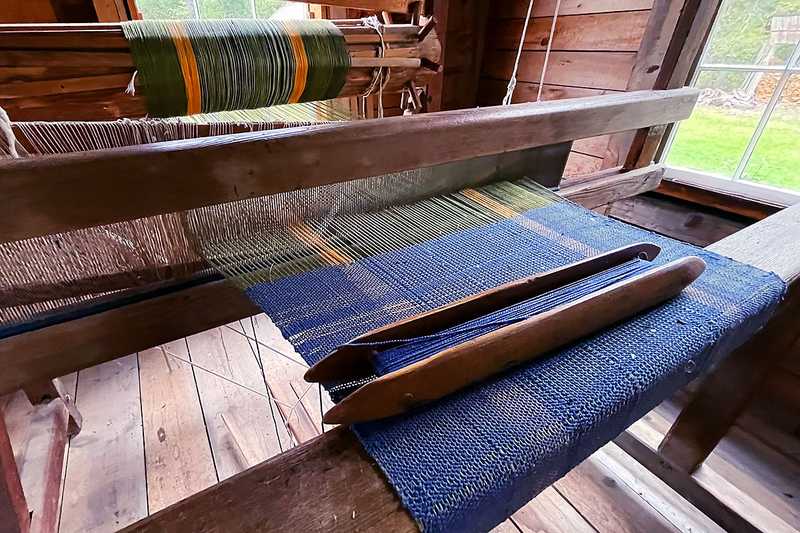
Spinning, Weaving, and Self-Sufficiency
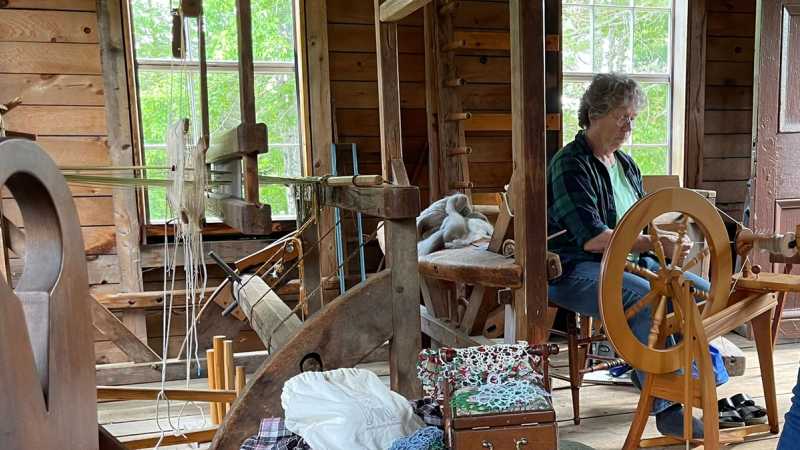
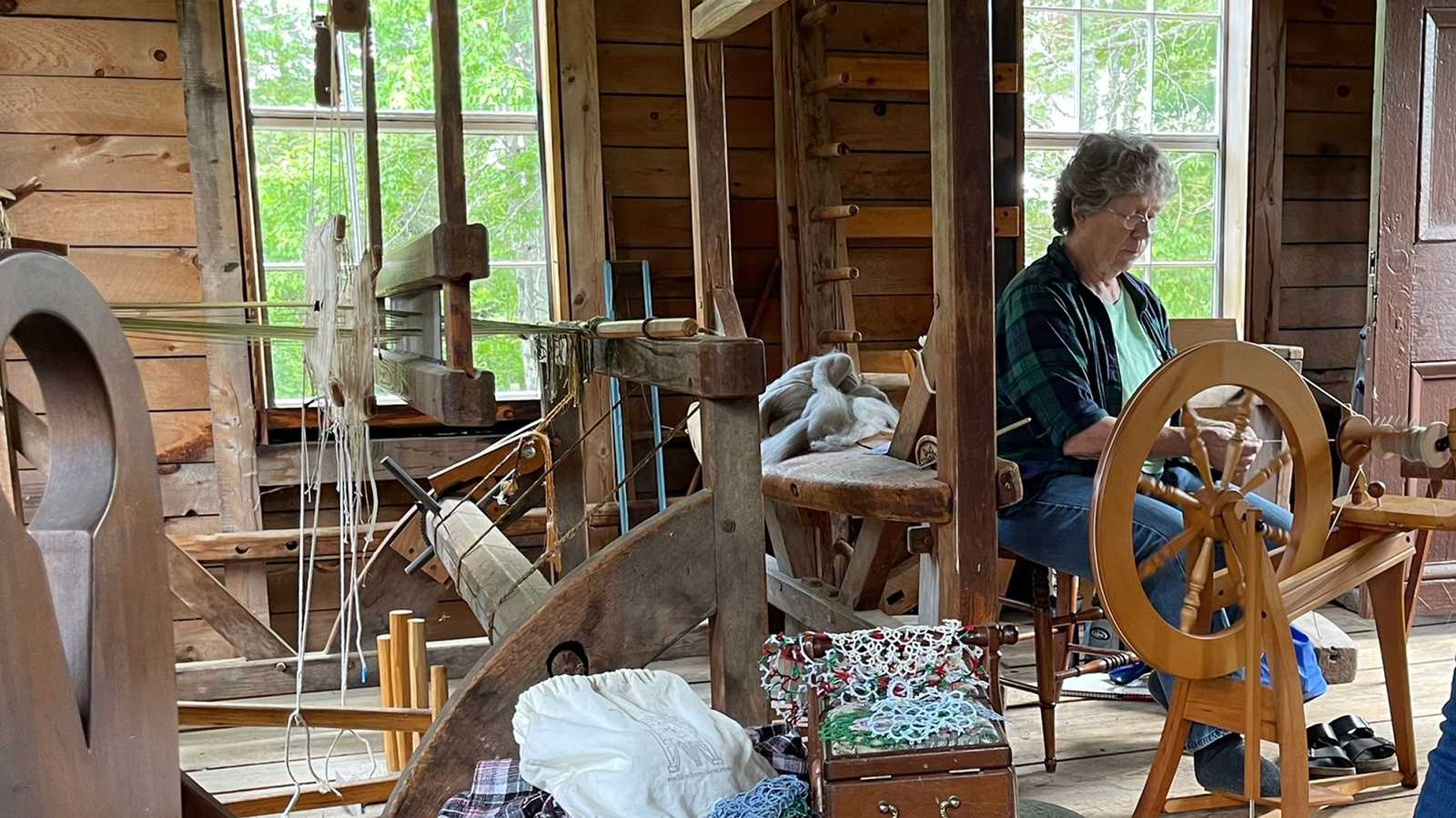
Inside the house, visitors will find a display of spinning wheels, looms, and tools used for processing flax and wool. These machines represent the essential home-based textile work done by many families, who relied on their own skills to clothe themselves through the seasons.
Museum interpreters sometimes demonstrate these traditional crafts, allowing guests to see firsthand how fibers were spun into yarn and woven into fabric—an essential part of life in rural Maine.
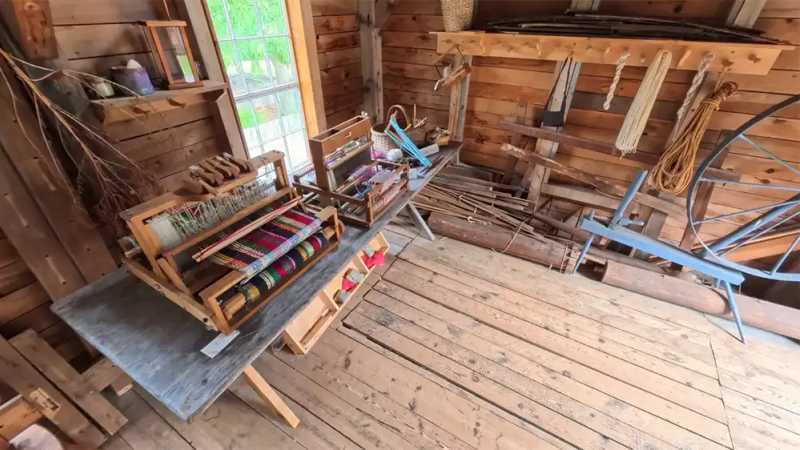
Step Inside the Sawyer House
Take a virtual look inside the Sawyer House with this interactive 360° panorama. Explore each room at your own pace, examine historic furnishings and artifacts, and experience the home from perspectives you might otherwise miss during your visit. Click and drag to look around, or tap and swipe on mobile devices to begin exploring.
An Invitation to Step Back in Time
Together, the Sawyer House and Gardens offer a quiet but powerful story about early life in Maine: the craftsmanship of homebuilding, the rhythm of household work, and the essential connection to the land. It’s a space that reminds us how resourceful—and resilient—our ancestors were.
Get Closer to the Story
Museum members enjoy special access to events and a deeper connection to our exhibits and traditions. Step into history—every season of the year.
Explore Member Benefits