
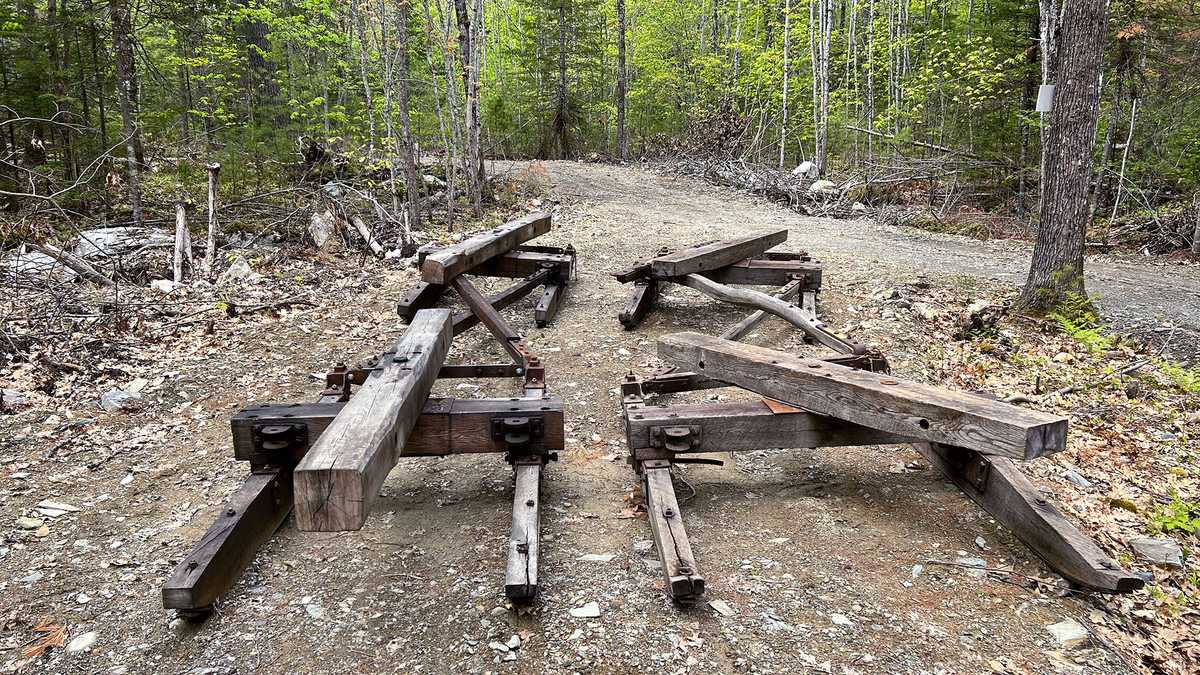
Beginning in the 1860s, horses began to replace oxen as the primary draft animals in North American logging. From the white pine era through the rise of pulpwood in the 1900’s and into the post-WWII years, sleds were the dominant method for moving logs from forest to landing, during the winter. For over 80 years, the heavy logging sled was as common as beans and biscuits in a lumber camp.
Powering the Timber Trade Through Ice and Snow
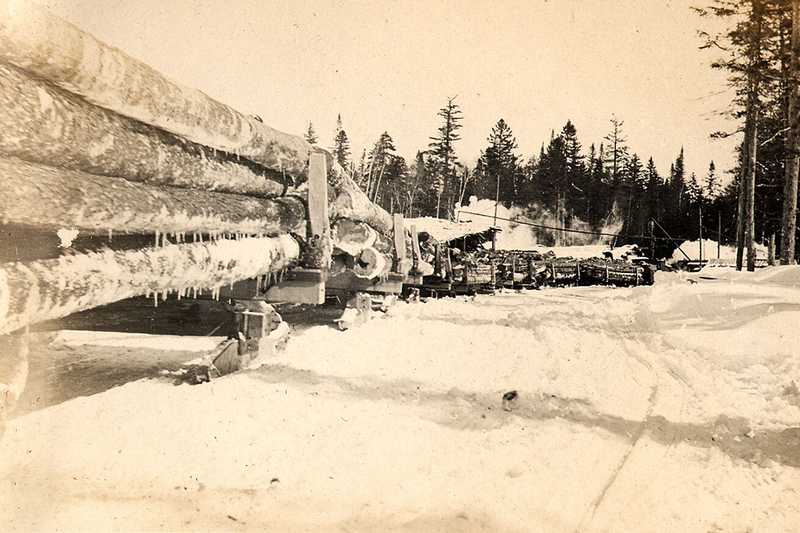
From the mid-19th century through the post-World War II era, logging sleds were an essential part of the North American timber industry. When the snows arrived, loggers turned to these rugged, reliable sleds to move massive loads from remote cutting sites to landings, where timber could be scaled and hauled to mills. Despite advancements in tractors and mechanical haulers, sleds remained the primary vehicle for timber transport in winter well into the 20th century.
Train of log sleds at Russel Brook, circa 1909
History and Design
Logging sleds evolved in tandem with the demands of the forest industry. Beginning in the 1860s, horses gradually replaced oxen as the draft animal of choice, increasing the range and efficiency of sled operations. By 1900, sled designs across the northeastern U.S. and Canada were finely tuned to maximize load-bearing strength, balance, and maneuverability.
The most common type, the two-sled rig, used a pair of sleds connected by reach poles or chains to form a single articulated unit. This design allowed massive loads—often up to 7 tons—to be hauled efficiently, even over uneven terrain. The flexibility of the reach poles ensured that each sled tracked precisely behind the one before it, minimizing drag and preserving the track.
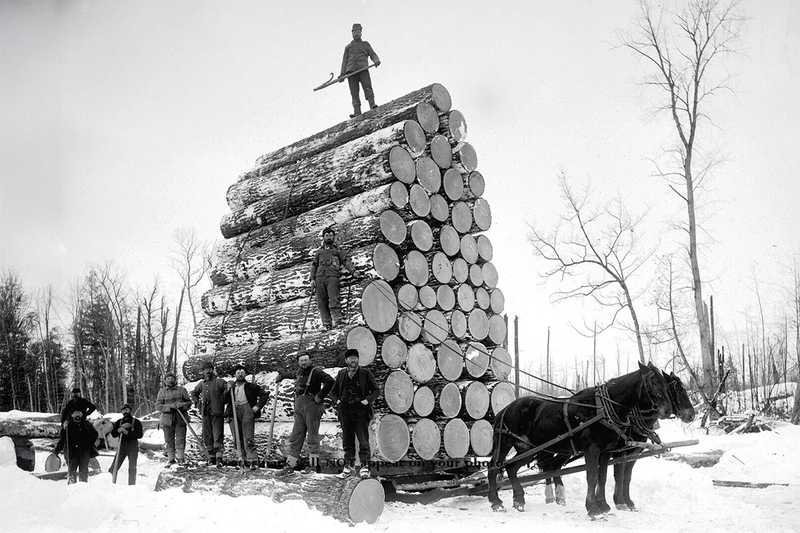
Incredibly, one documented 1893 haul in Michigan saw a single team of horses pull a load of 144 tons of white pine logs, later exhibited at the World’s Columbian Exposition in Chicago.
The World's Fair 1893 load of logs, 36,055 feet
Sled Types and Uses
- Snaking: Logs were pulled individually with chains—efficient over short distances.
- Draying: A light sled cradled one end of the log while the other dragged.
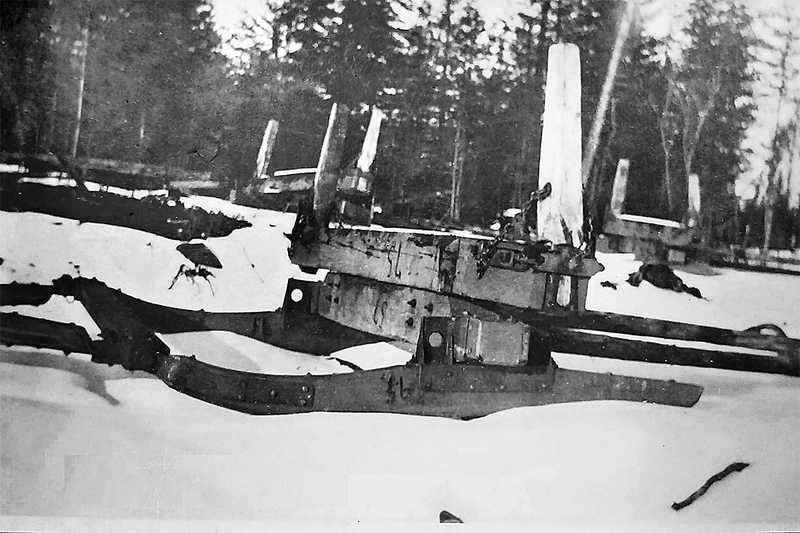
- Two-Sled Rigs: The workhorse of winter logging; featured pivoting bunks and flexible “knees” for maneuverability.
Sleds were designed to be simple, yet incredibly strong. Key components included:
- Runners and cross-beams for load-bearing
- Pivoting bunks for stability and steering
- Iron or wooden “knees” that allowed a controlled flex in the frame
Innovations in knee design—from the rugged McLaren and Lombard knees to more DIY-friendly Rave and Block knees—allowed for repairs and customizations right in the logging camps.
Closeup of McLaren style knee.
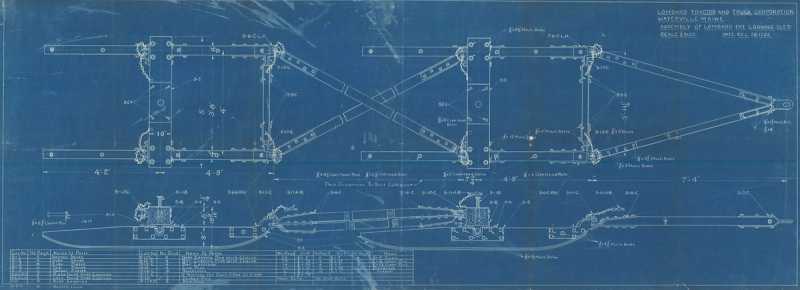
The Lombard Connection
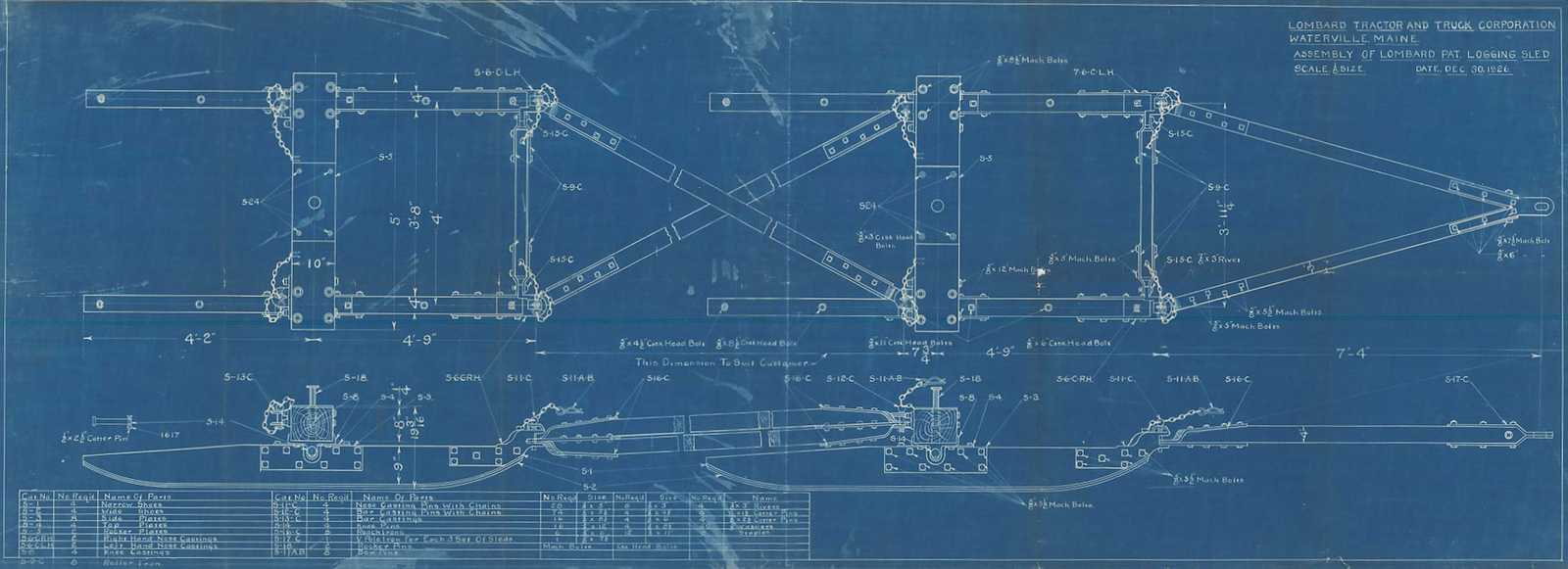
The two logging sleds on display at the Maine Forest & Logging Museum are representative of the height of sled development. Both were designed for use with Lombard Log Haulers, the revolutionary crawler-traction machines patented in 1909 by Alvin Lombard of Waterville, Maine. Lombard’s designs were so successful that loggers could order entire sled rigs and replacement hardware directly from the Lombard factory.
These sleds are more than equipment—they are artifacts of ingenuity, muscle, and tradition that defined winter logging in Maine for generations.
Get Closer to the Story
Museum members enjoy special access to events and a deeper connection to our exhibits and traditions. Step into history—every season of the year.
Explore Member Benefits