
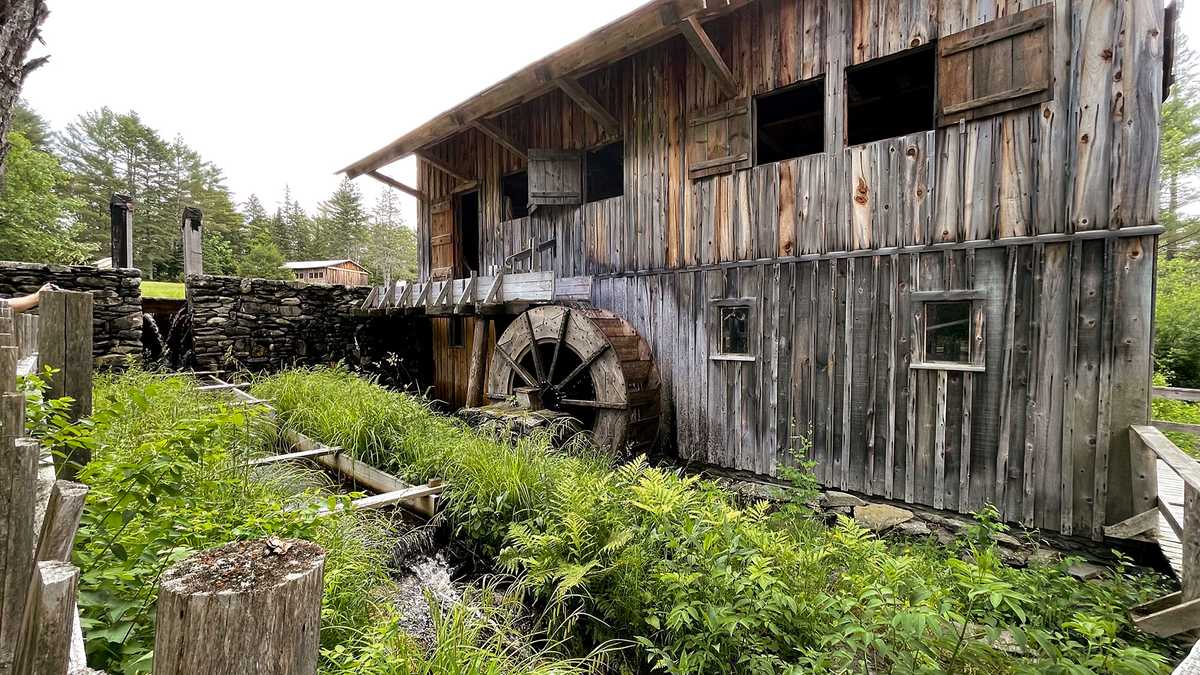
Leonard’s Mill is the heart of the Maine Forest and Logging Museum — a functioning reconstruction of a late 18th-century water-powered sawmill. Built using traditional methods, it’s more than just an exhibit; it’s a living window into the region’s early industrial roots, where the force of flowing water powered the growth of communities like Bradley, Maine.
A Namesake from History
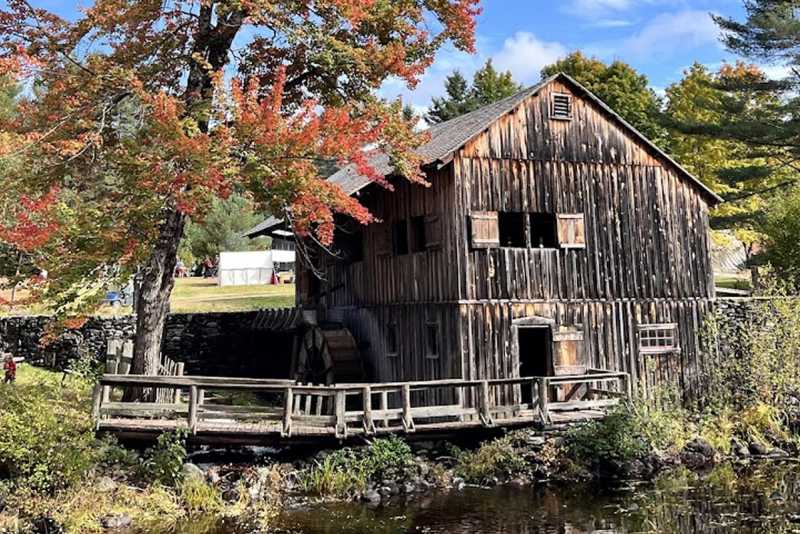
The mill takes its name from Oliver Leonard, an early landowner in the Bradley area during the late 1700s. His name and legacy remain tied to this site, which once served as a frontier settlement on the banks of Blackman Stream. The landscape today still holds clues to its early days — including the remnants of a stone dam and house foundations — preserving the story of its first settlers.
Powered by Water, Built with Hands
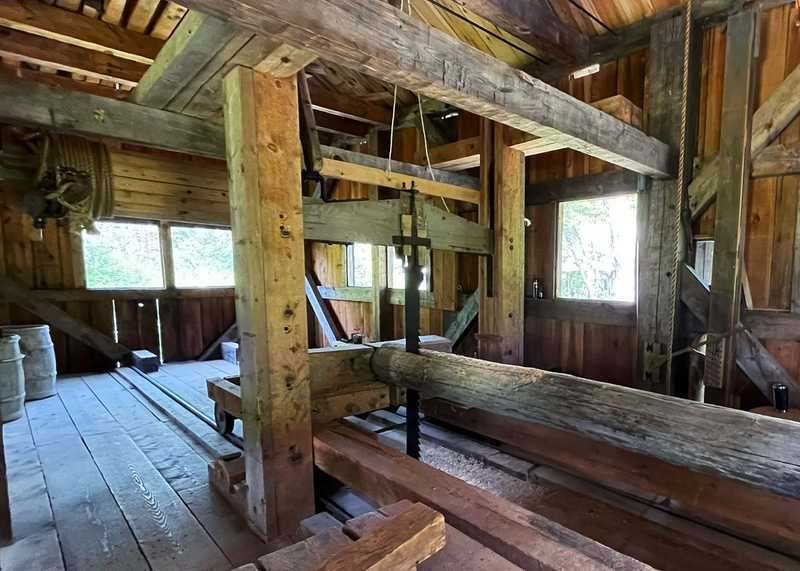
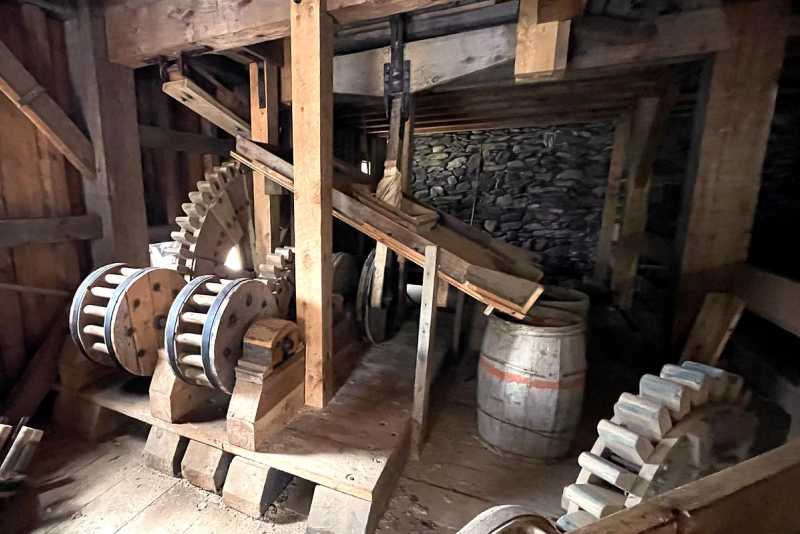
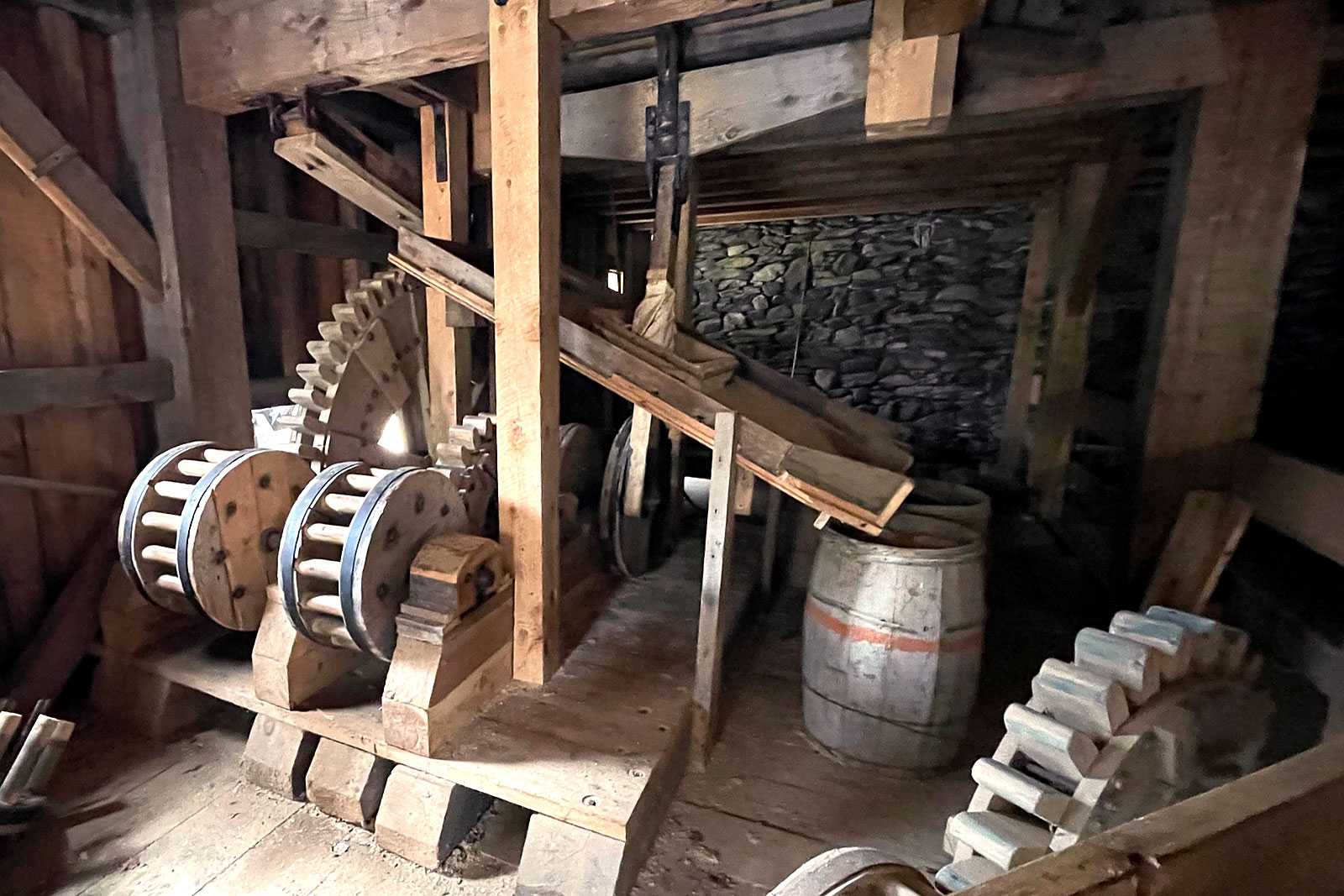
Leonard’s Mill is a faithful reconstruction of an “up-and-down” sawmill, a style of mill common during the 18th and early 19th centuries. The mill’s large water wheel captures the energy of Blackman Stream, transferring its power through wooden gears to a vertical saw blade that rhythmically slices through logs — just as it did over 200 years ago.
A Living Museum
When you visit Leonard’s Mill during an event or school tour, you may see the sawmill in action — the saw groaning and the blade rising and falling in a mesmerizing cycle. Surrounded by other period structures such as a blacksmith shop, settler’s cabin, and covered bridge, the mill becomes part of a broader immersive experience in Maine’s forest heritage.
Echoes of the Past
Leonard’s Mill is more than a building — it’s a working symbol of how early Mainers used natural resources and ingenuity to thrive. It reminds us of the deep connection between people, forests, and water, and offers a hands-on opportunity to see history come to life with every turn of the water wheel.
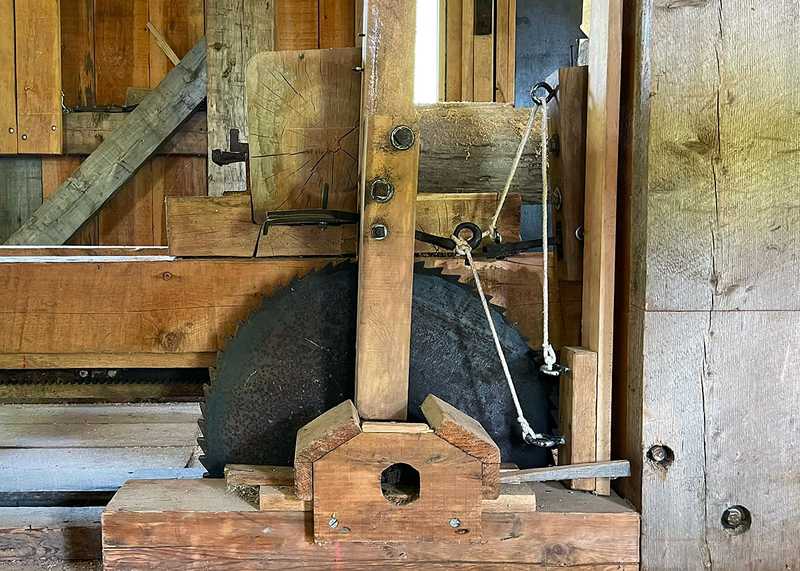
Closeup of mechanism that moves the log forward with every stroke of the saw blade.
Be Part of
Living History
Love Maine's heritage? So do we. Volunteers help operate the museum's working mills, lead tours, clear trails, and more. Your skills—old or new—can help preserve and share the past in a hands-on, meaningful way.
Become a Volunteer