
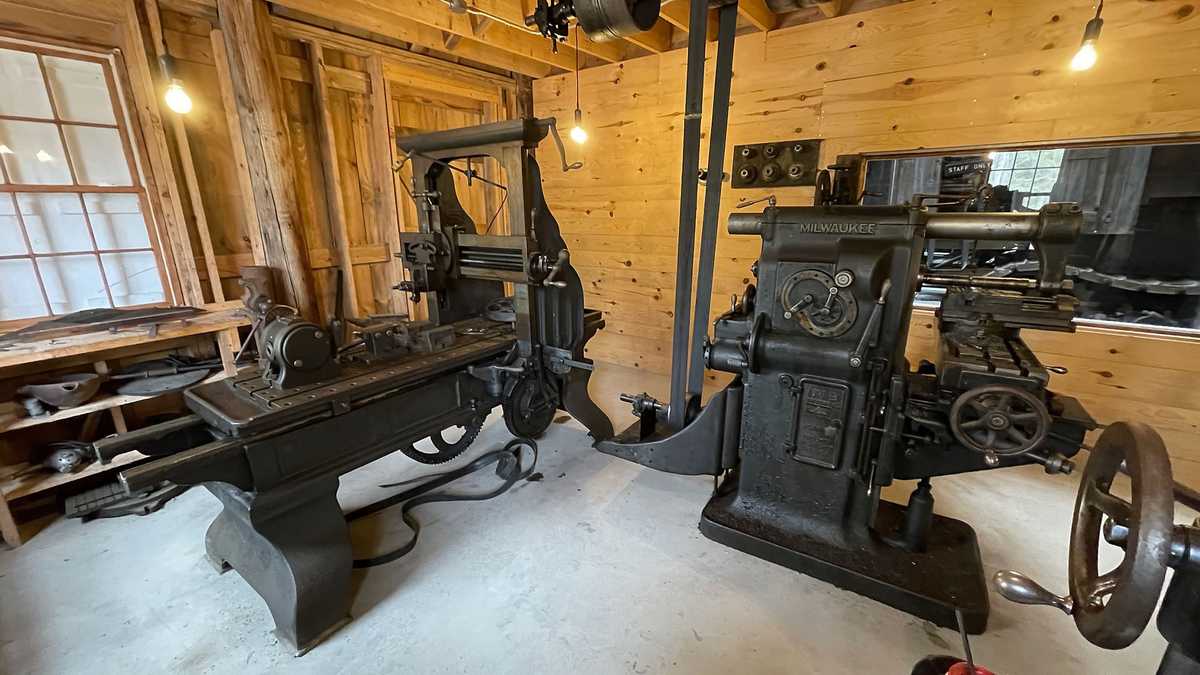
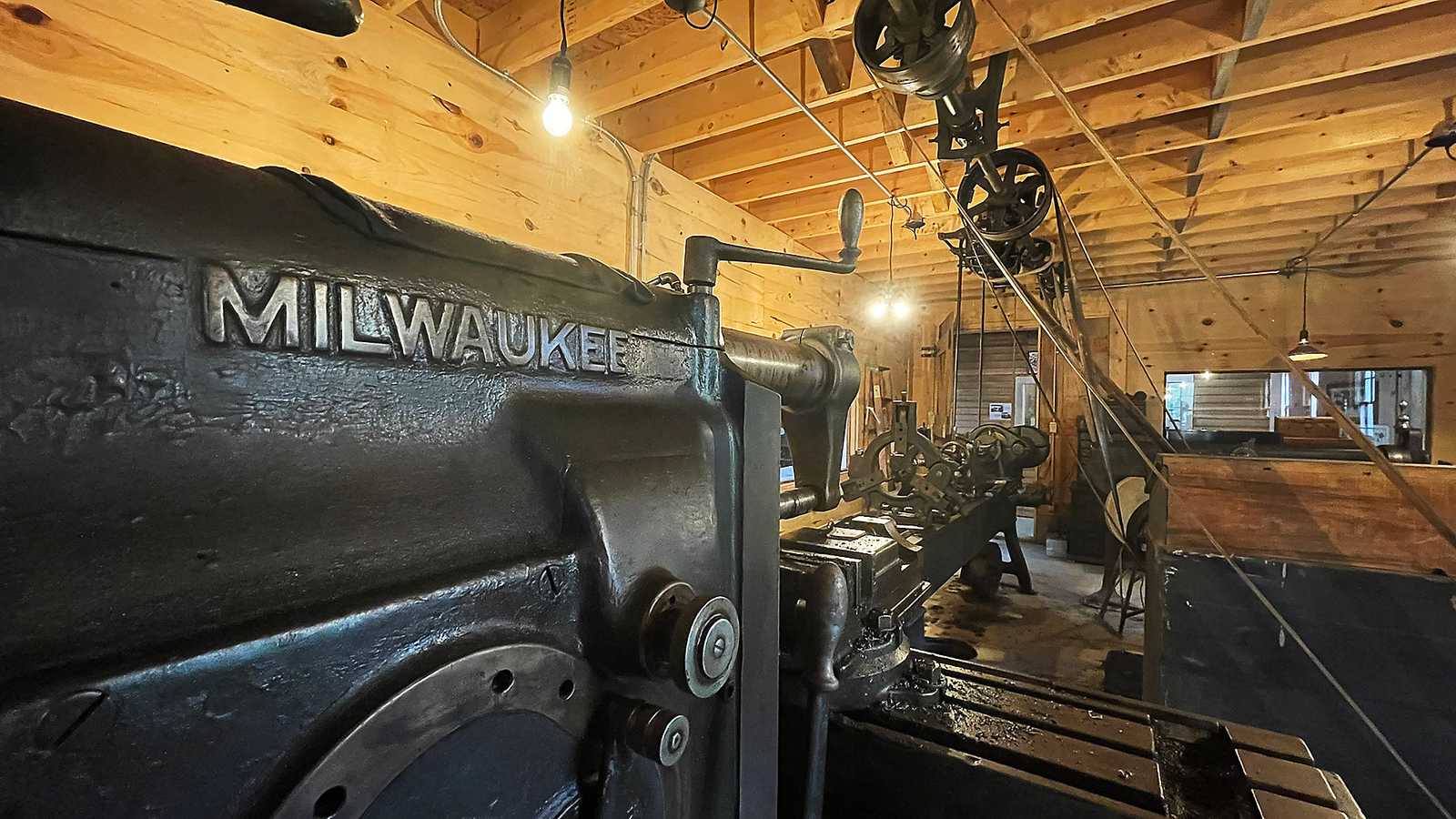
While blacksmiths forged tools by hand, machinists took it a step further. In the early 20th century, machine shops like Chester Grady’s represented the cutting edge of rural industry. Located in the museum’s Visitor Center, the Grady Machine Shop exhibit showcases a fully belt-driven workspace that transformed Maine’s manufacturing capabilities.
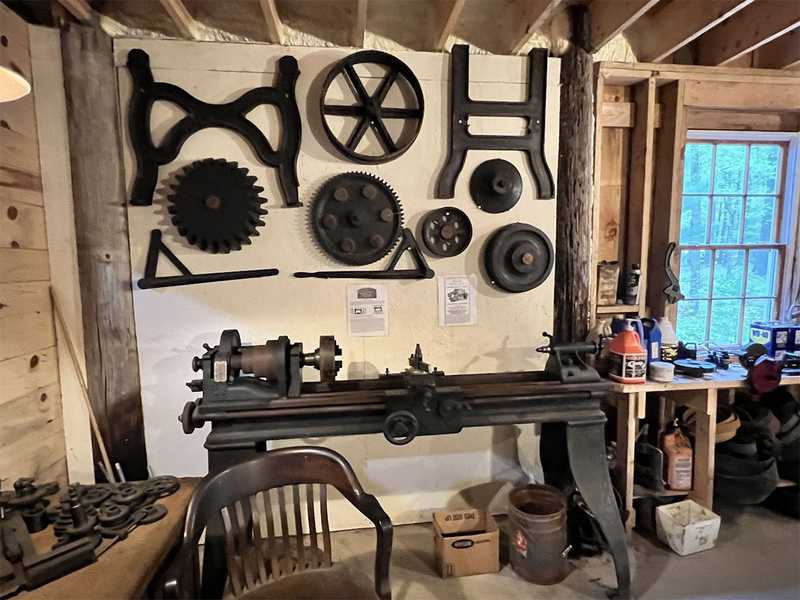
A Shop That Built a Community
Chester Grady’s original shop, once located just outside Belfast, Maine, was more than a workshop — it was a hub of innovation. Grady used his mechanical skill and entrepreneurial spirit to create parts and tools needed in his local economy. As he once modestly put it, it was “no more than an upgraded blacksmith shop,” but to his neighbors and customers, it was indispensable.
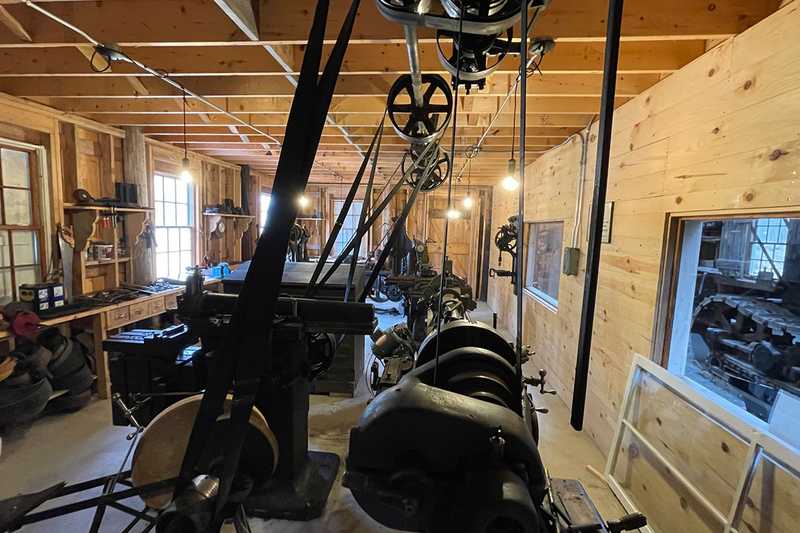
Powered by Lineshafts
All of the machines in the Grady Machine Shop are driven by overhead lineshafts — an ingenious system where one motor or power source turns a network of pulleys and belts to operate multiple machines. This exhibit offers a rare chance to see this setup in motion and understand how energy was distributed in early machine shops.
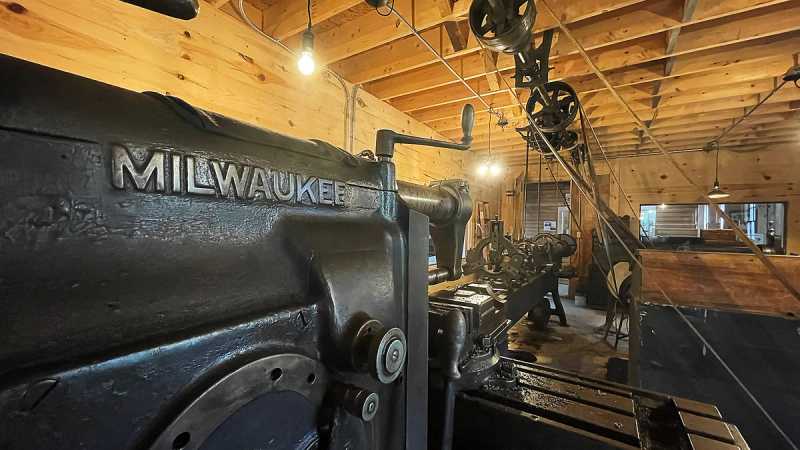
A Legacy of Skill and Service
The shop is a tribute not just to Chester Grady’s craftsmanship, but to the countless small-town machinists who helped drive America’s industrial growth. As you explore the space, you’ll witness the clever blend of brain and brawn it took to make complex, functional parts long before digital tools and automation.
Shape the Future of the Past
Share your time, learn something new, and become part of a museum unlike any other. From seasonal events to weekly projects, volunteers help us bring history to life and keep this special place running strong year-round.
Start Volunteering