
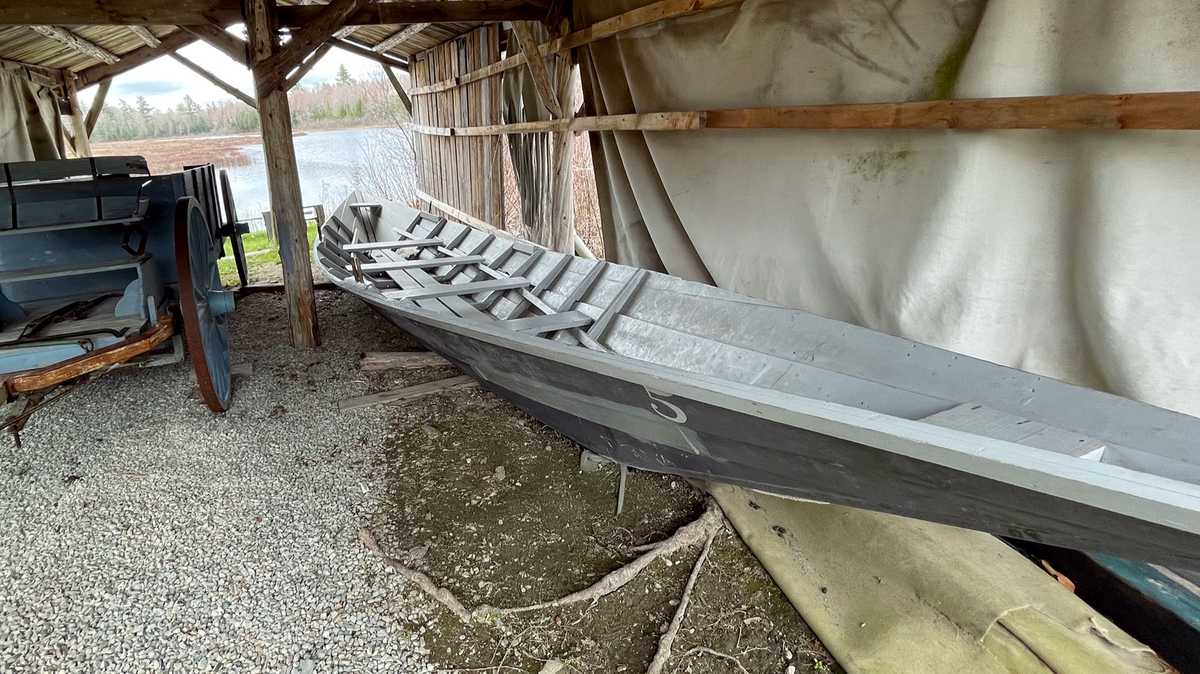
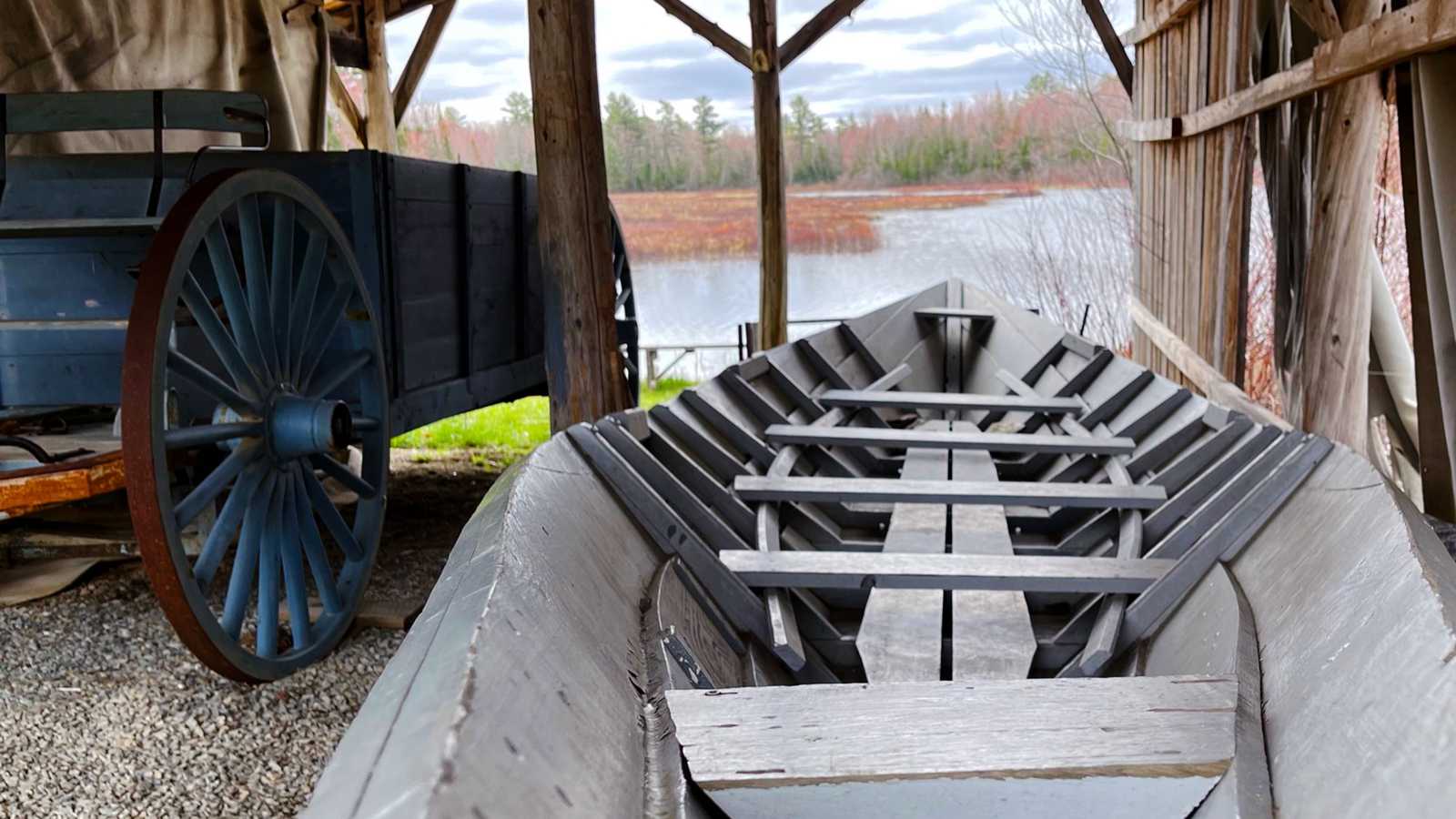
The batteau was a long, narrow, flat-bottomed boat designed specifically for maneuvering in shallow, fast-moving waters. Unlike canoes or rowboats, batteaux were built to be stable, durable, and versatile — perfect for the rugged task of transporting and controlling timber on Maine’s remote riverways.
Tools of the Timber Trade
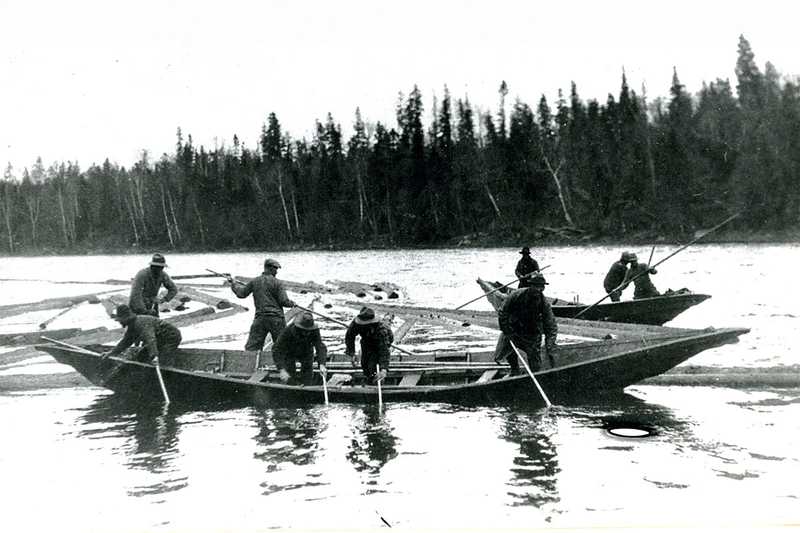
During Maine’s peak logging years, river drives were the primary way to move felled trees from deep forest cuts to downstream mills. Batteaux served as floating platforms for foremen and river drivers, who relied on them for transporting equipment, cooking gear, and provisions as they guided logs downstream.
River drivers used long poles and peaveys to keep logs moving and prevent dangerous jams. Batteaux played a critical role in reaching difficult spots and allowed teams to steer the flow of timber efficiently and safely.
Two bateaux in river: three men in one, four men in the other, two men standing on logs. Allagash/St. John Rivers.
Image curtesy: Special Collections, Raymond H. Fogler Library, University of Maine. P00455 NA2586 MF108 NAFOH
A Dangerous Job
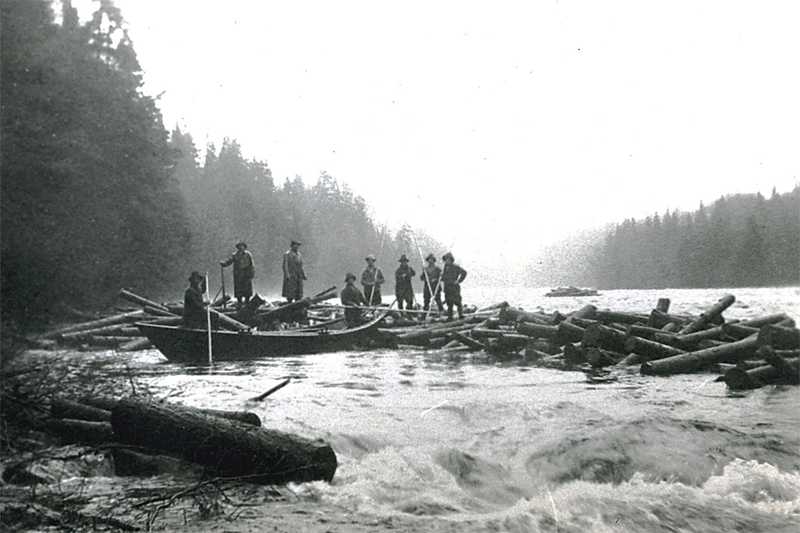
Spring drives were treacherous. Crews faced icy water, swift currents, and heavy, shifting logs. River drivers had to be agile, fearless, and highly skilled. Batteaux gave them a mobile base of operations—but they didn’t eliminate the risks.
These boats symbolize the rugged spirit of the people who built Maine’s logging economy with sweat, strength, and courage.
Eight men working on a small jam of logs. Two men holding bateaux in current on the Allagash/St. John Rivers.
Image curtesy: Special Collections, Raymond H. Fogler Library, University of Maine. P00456 NA2586 MF108 NAFOH
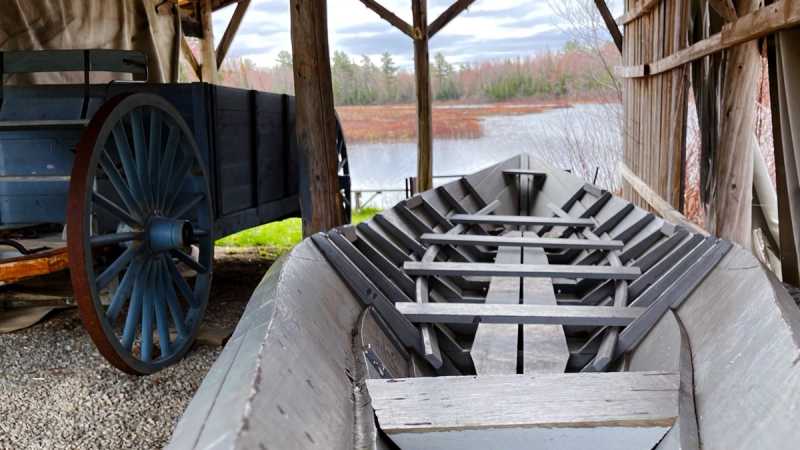
See the Craftsmanship Up Close
Today, the museum preserve an example of traditional batteau, built using period techniques and displayed with the tools of the trade. You can see this on-site near the stream where similar boats once worked the currents.
Come experience a crucial piece of river logging history—and imagine the roar of the river, the clash of logs, and the steady push of oars through Maine’s forest waters.
Shape the Future of the Past
Share your time, learn something new, and become part of a museum unlike any other. From seasonal events to weekly projects, volunteers help us bring history to life and keep this special place running strong year-round.
Start Volunteering