
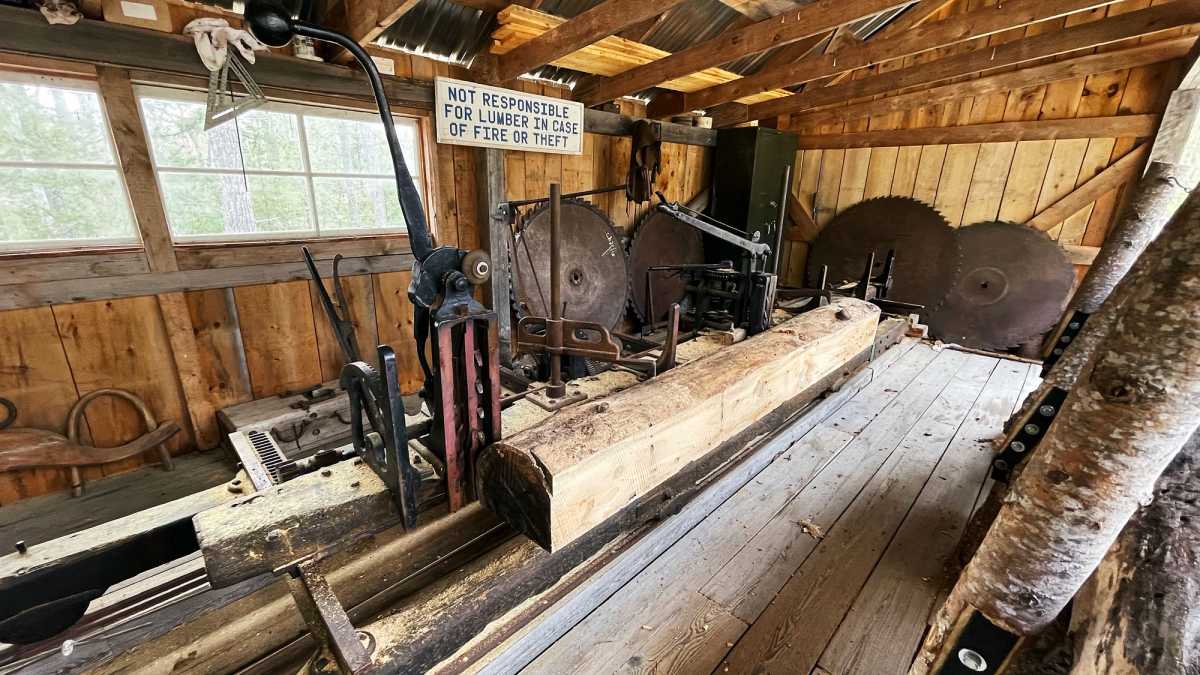
Step into the heart of Maine’s early industrial sawmilling at the 1920 Mill Yard Complex. This working exhibit brings together heavy machinery and human ingenuity in a series of original, belt-driven mills — all powered by the drive systems that once defined logging operations in the early 20th century. The Mill Yard offers visitors a close-up look at how logs were transformed into lumber, shingles, and boards with speed and efficiency.
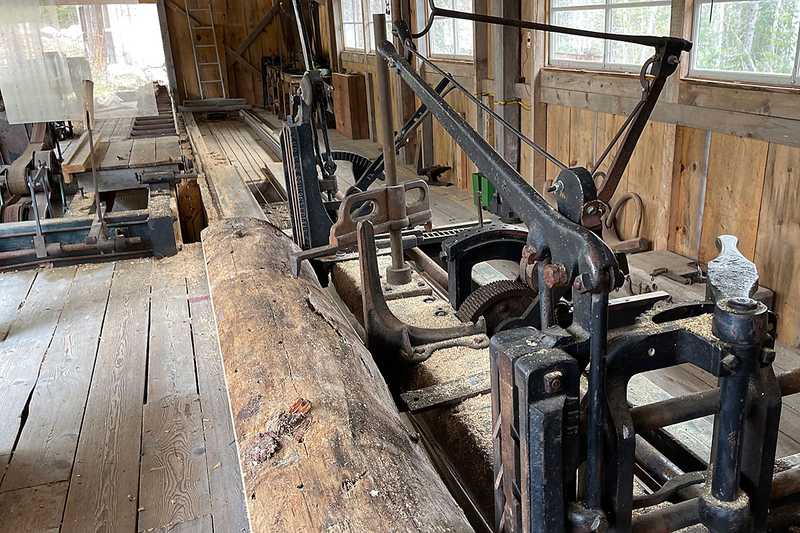
Rotary Sawmill
Hackett and Witham Rotary Sawmill
At the center of the complex is a massive 50-inch rotary saw blade — the muscle behind the Hackett and Witham rotary sawmill. Logs are positioned on a sled and advanced across the spinning blade, producing rough-cut lumber with each powerful pass. This type of mill allowed for high-volume sawing and reflects the growing demand for dimensional lumber during the early 1900s.
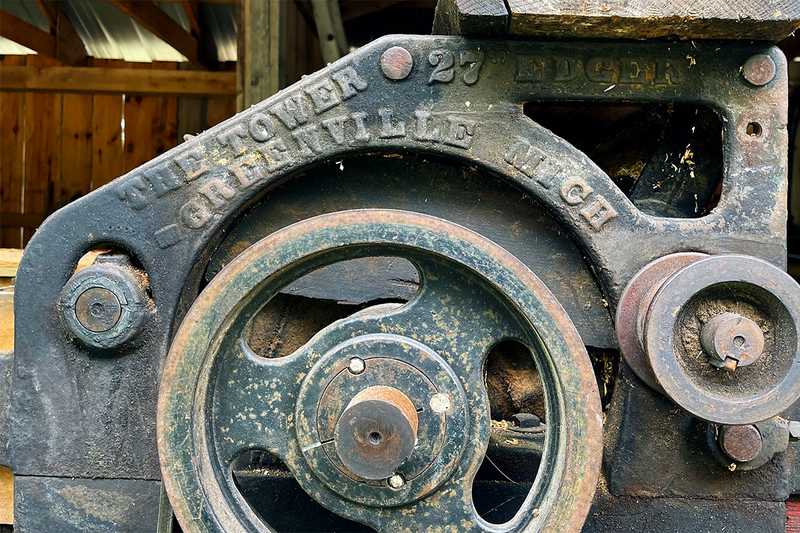
Board Edger
R.J. Tower 27-Inch Twin-Saw Edger
After logs are initially milled, boards often need to be squared off or resized. That’s where the board edger comes in. This two-saw edger, built by R.J. Tower, refines rough-cut planks by trimming the edges to uniform width. Operating in tandem with the rotary saw, it highlights the increasing mechanization and efficiency in lumber processing during this era.
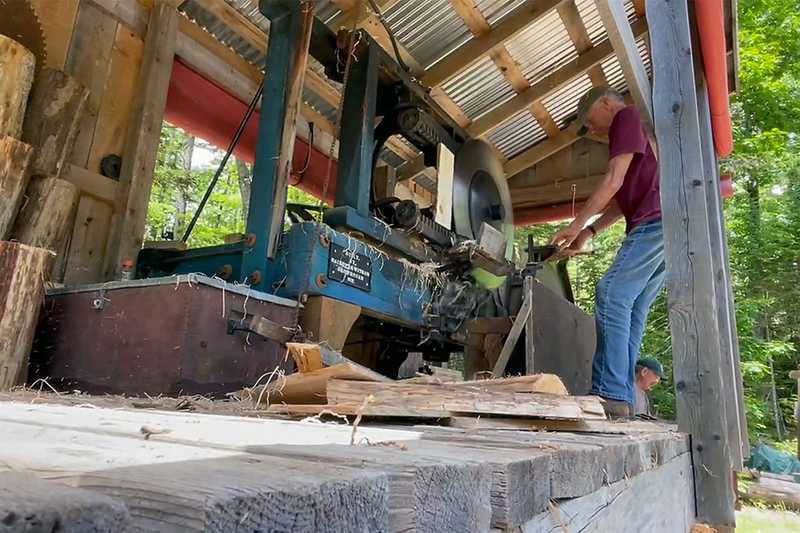
Shingle Mill
Hackett and Witham Shingle Mill
In a nearby shed, short cedar logs are transformed into roofing shingles using a specialized shingle mill — another Hackett and Witham design. Visitors can see how logs are carefully shaped and sliced in a sequence of angled cuts, producing the tapered wooden shingles that were essential to construction across rural Maine.
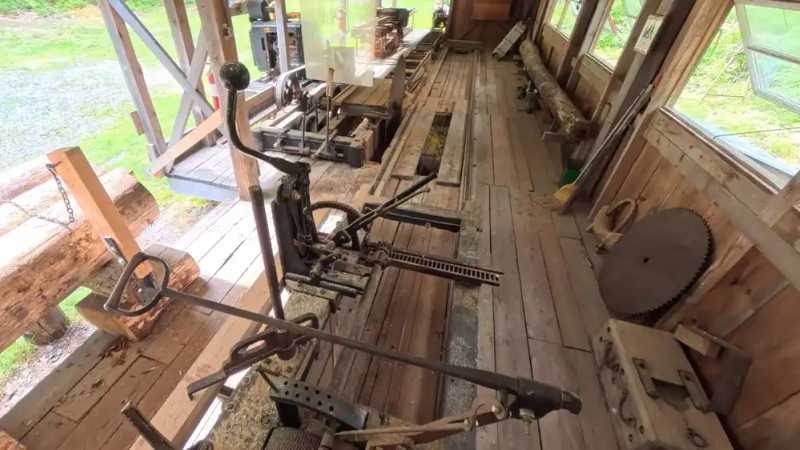
Step Inside the Harville Rotary Sawmill
Take a closer look inside the Harville Rotary Sawmill with this interactive 360° panorama. Explore the massive sawmill from every angle, examine the machinery that transformed raw logs into usable lumber, and discover the engineering that made rotary sawmills an important part of Maine's forest products industry.
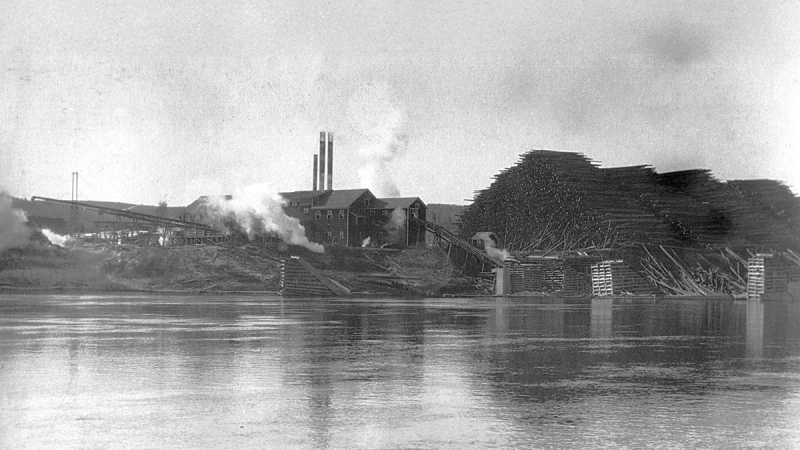
A Look Back
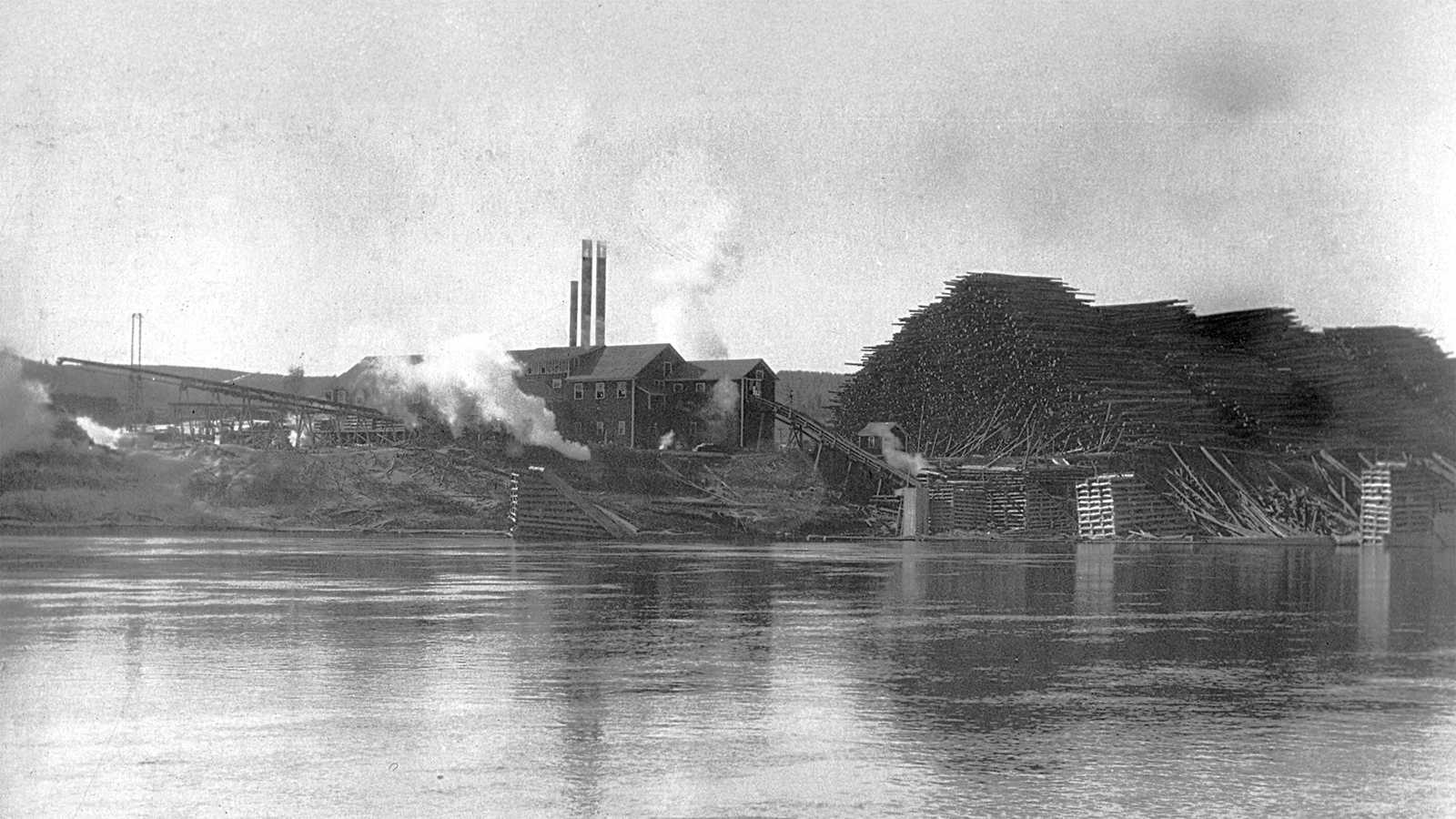
The 1920 Mill Yard Complex reflects the height of Maine’s industrial lumber age, when mills like these dotted riversides and rail lines, supplying wood for homes, ships, factories, and export. Each machine here represents a step forward in mechanical processing — reducing labor while increasing output. And yet, every belt, blade, and bearing still depended on the hands and skill of those who operated them.
Madawaska Company mill
Be Part of
Living History
Love Maine's heritage? So do we. Volunteers help operate the museum's working mills, lead tours, clear trails, and more. Your skills—old or new—can help preserve and share the past in a hands-on, meaningful way.
Become a Volunteer